NSF's $1.5B, and the fewest grants in 40 years

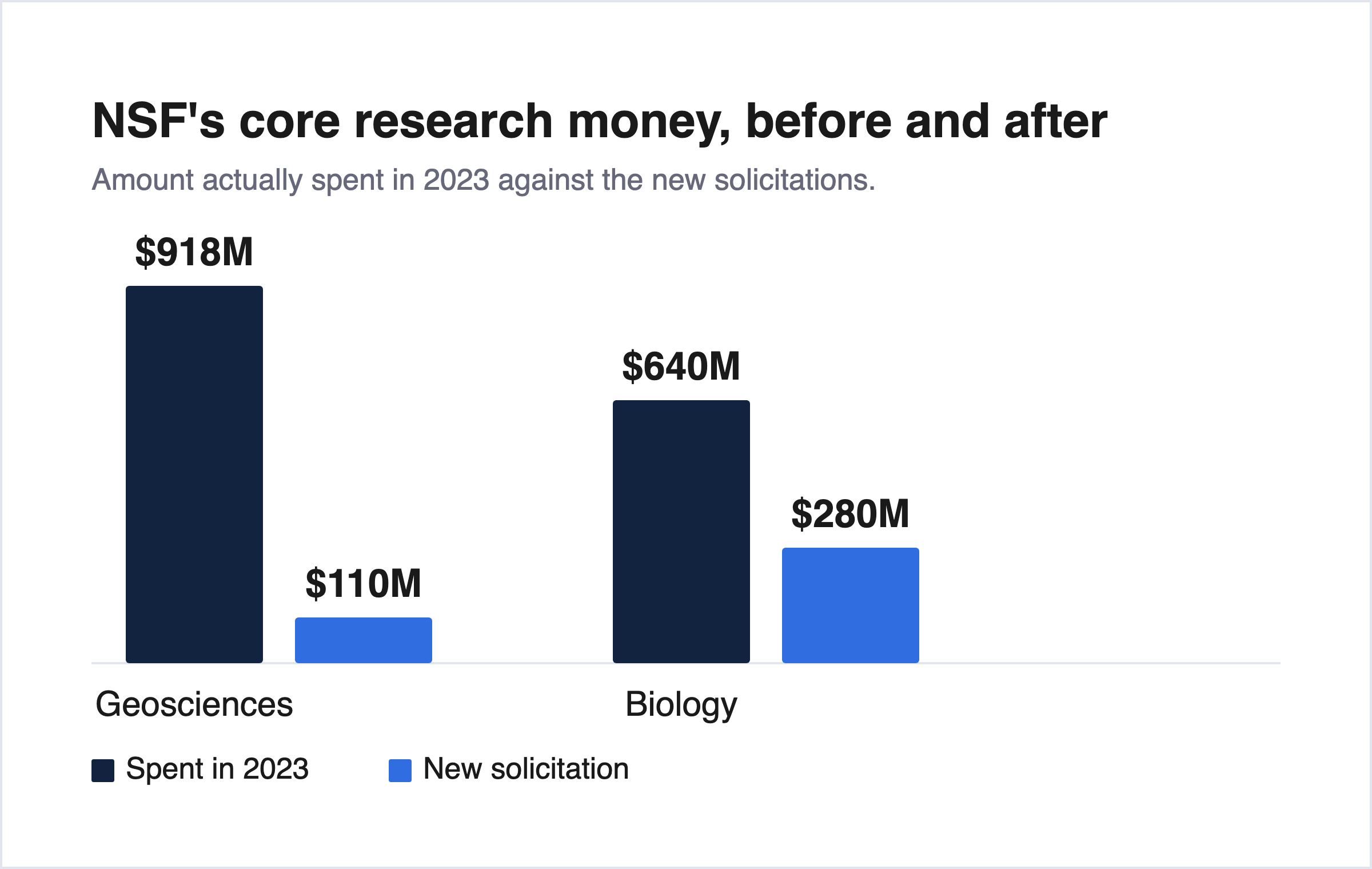
Morning. NSF put out $1.5 billion this week and the room couldn't decide whether to be relieved or worried. Both, probably. It's real money after eighteen months of very little. Then you look at how it splits by field, and geosciences goes from $918 million to an estimated $110 million. Geosciences is looking at roughly an eighth of what it got in 2023. That part isn't in the press release.
 | Erik Founder, Manusights |
NSF put $1.5 billion on the table. It's still issuing the fewest grants in forty years.
NSF has reopened 12 funding calls worth more than $1.5 billion. A call is the announcement that says a programme is taking proposals again, and for eighteen months most of them were closed.
The number the announcement leaves out. NSF is on track to hand out about 6,100 new grants this year. Nature reports that is the fewest since the early 1980s, and roughly half what it was awarding three years ago.
$1.5 billion is smaller than it sounds. NSF normally spends about $8.8 billion a year on university research. So this is about two months of its usual spending. Which fields get what is uneven, and the chart is the short version.
Three things changed in the rules.
- You can apply for a long grant, up to five years, or a short one meant to test a single idea fast. Before there was one shape of grant, and now there are two
- Early-career researchers are named as welcome in all 12 calls. Read that next to half as many awards
- $1 billion of NSF's $8.8 billion is being held back in a central pot instead of going out to the programmes that actually award the grants
One thing that cuts the other way. The $110 million figure for geosciences is an estimate inside an announcement, not money already voted through. The direction is real but the exact number is a guess.
What I would do. The short-grant option is the part worth your attention. If you have something you could test inside a year, that is a different proposal from the one you were planning to write, and it is exactly the kind of thing that gets missed when everyone stops reading at the headline number.
Why it matters: If your field is among the 12, open the notice this week rather than waiting for a deadline email, and check which award shape you're actually eligible for. Then plan for a thinner year than the press release suggests. Forward this to whoever in your group is deciding whether to bother applying this cycle.
Sources: NSF News, 17 Aug 2026 · Science, 19 Aug 2026 · Nature news, 20 Aug 2026
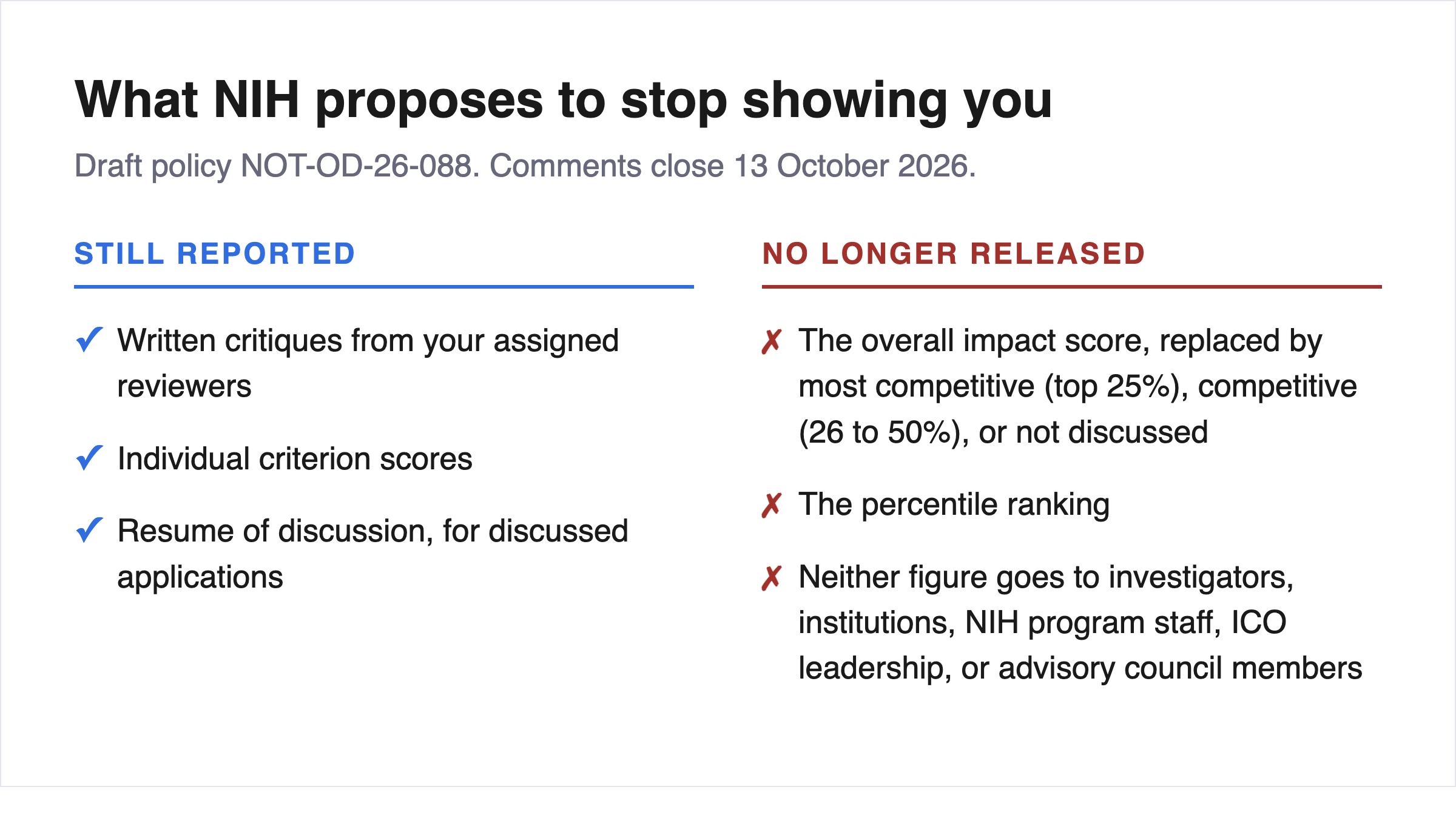
🔎 Your NIH score: the comment window closes 13 October. NIH wants to stop telling you the score your grant application got. You would still see the written reviews, just not the number. There are seven weeks left to say what you think about that.
Why it matters: Is losing that number bad? Depends who you ask. One side says a score averaged from three reviewers was never as exact as everyone treated it. The other side points out that a score you are not allowed to see is a score you cannot argue with, and that the same notice tells NIH's 27 institutes to weigh peer review against their own priorities.
What I would do: If you have a resubmission in the pipeline, write down its score and percentile this week. Under this proposal you would not see either one next time, and how close you came is the whole basis for deciding whether to revise or start over. Then spend ten minutes saying that in the comment box. You can leave your name off it.
Reference: NIH Guide, NOT-OD-26-088
Coverage: Nature news, 18 Aug 2026 · 2026-08-18 · 4 min
🧪 A biosafety policy that becomes a condition of your funding. NIH opened public comment on a draft Biosafety Policy that would replace the NIH Guidelines for recombinant DNA research and cover all laboratory research involving biohazards.
Why it matters: Easy to ignore, until it's a funding condition. This one is easy to file under "somebody else's problem" until you notice it would become a term and condition of NIH funding, which makes it your institution's problem and therefore yours. Comments close 19 October 2026, they can be submitted anonymously (which matters, because the people with the sharpest opinions about their institutional biosafety committee, the group that has to sign off before your work starts, usually have to work with it again), and NIH is asking specifically what that committee should be responsible for. If you've ever waited months on that sign-off, this is the rare moment the process asks what you think.
What I would do: Look up how long your last biosafety approval actually took, start to finish. That one number is the most useful thing you can put in the comment box, because NIH is asking what the committee should be responsible for and nobody outside your institution knows what the wait really is. Anonymous submissions count the same as signed ones.
Reference: NIH Guide, NOT-OD-26-112 · 2026-08-19 · 3 min
📈 The case that citing yourself is doing your field a favour. A study in Society finds that in one emerging field, an author's self-references predicted later citations from unaffiliated authors, while their other references predicted nothing.
Why it matters: Each additional self-reference was associated with about 11 more citations from unaffiliated authors (β = 11.09, p = 0.010), and it held even after self-citations were taken out. The limits, which the authors state plainly: 42 papers drawn from a pool of 1,289, one emerging field, and a model explaining 19.3% of the variance. That's an association in a small sample. Don't go planning a paper around it. Cite the work because it belongs.
What I would do: Open the reference list on whatever you are about to submit and look for one of your own papers you left out to seem modest. If the argument genuinely rests on it, put it back. It costs you nothing and it makes the paper easier to follow.
Reference: Society (Springer), 20 Apr 2026
Coverage: The Scholarly Kitchen, 20 Aug 2026 · 2026-08-20 · 5 min
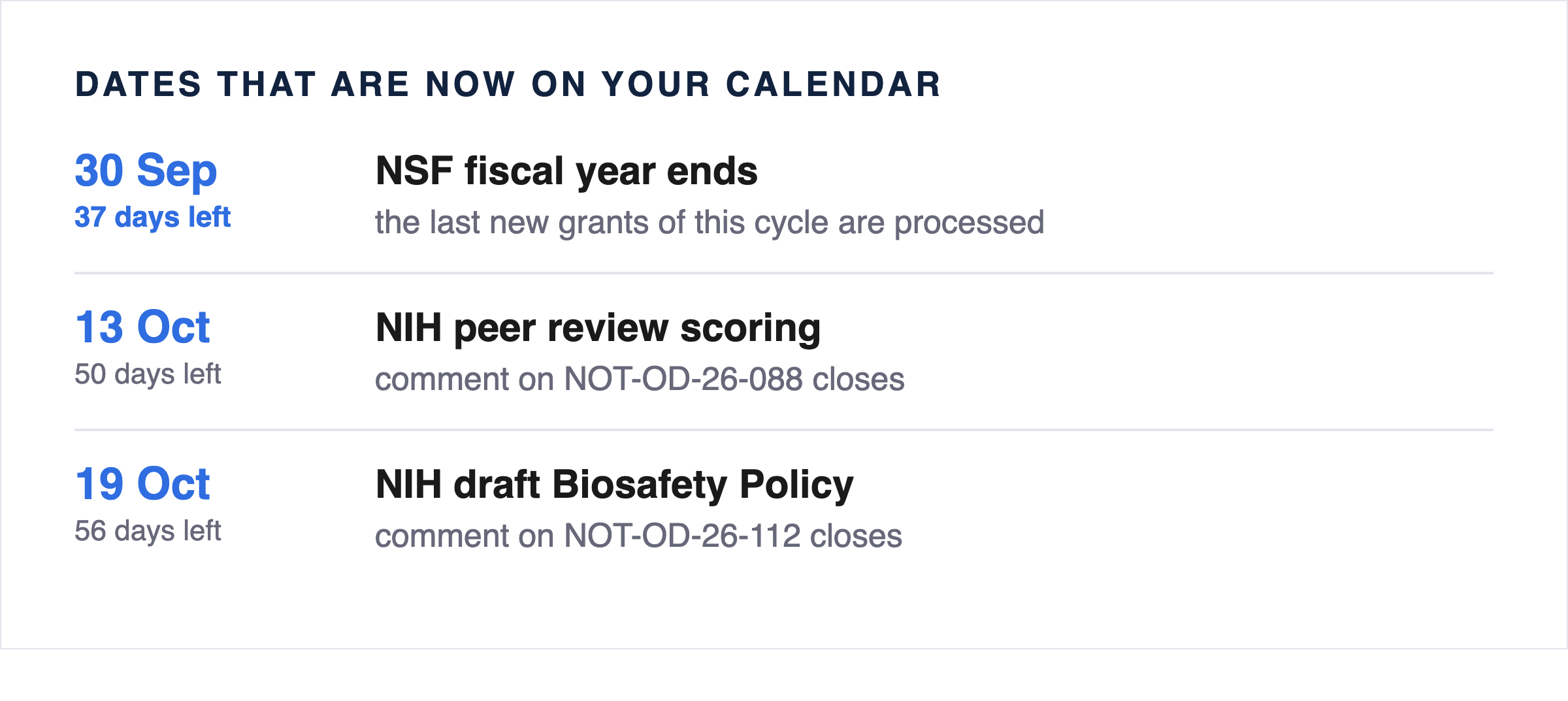
Three windows are open right now, and two of them are your chance to say something to NIH before it decides. Comments on both notices can be submitted anonymously, which matters more than it sounds. When do you ever get to tell NIH what you think without your name on it?
The revisions you get asked for are rarely a surprise in hindsight. Pull them forward. Ask for the demands, not the compliments, and fix the two you can fix this week.
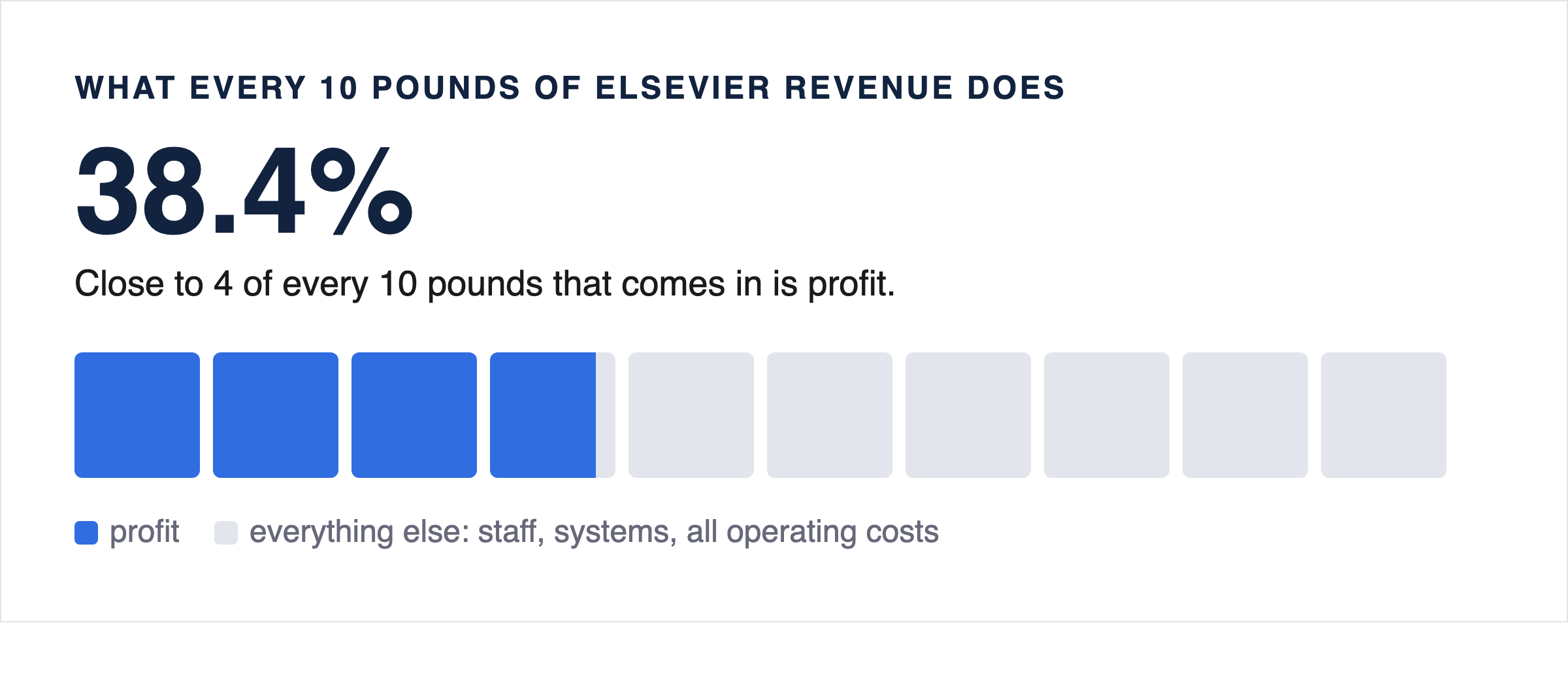
The adjusted operating margin RELX reported for 2024 in the division that publishes as Elsevier, on papers researchers write, review, and edit for free. That's £1,172 million of profit on £3,051 million of revenue, up from 38.0% the year before.
Sources: RELX, results for the year to 31 December 2024 (STM segment)
Corrections: None this week. Spot an error? Reply and we'll run the correction right here, loudly.
That's the week. Forward this to a labmate deciding where to submit, and if it reached you secondhand, subscribe in one tap.
Whenever it is useful: if you have a draft going, run it through the free check and see what an editor would screen for. If you are earlier than that, the Academy works the same method on whatever you have so far.
What should be in next week's issue? Reply to this email with the thing you wish someone would explain, or the deadline you nearly missed. I read every one, and the ones I can source go in with a note that you asked.
How was today's issue? Great · Fine · Meh
| Erik Founder, Manusights |
Get this every Monday
What changed in publishing, what it means for your submission, and one thing to try. Free.
Subscribe