Publishing resources for PhD students and postdocs already working in a lab
This page is for trainees who are already in the workflow: running experiments, preparing figures, drafting fellowship applications, revising papers, and trying to make sensible journal decisions without guessing. It is not a generic introduction to academic publishing.
The goal is simple: give PhDs and postdocs one place to find the documents, comparisons, and field-specific guidance labs end up needing over and over, especially when a PI says “draft the cover letter,” “check whether this is F31-eligible,” or “figure out which journal this should go to.”
25
Guides
57
Journals
4
Fellowship guides
Mar 2026
Last reviewed
New PhD student
Later-stage PhD
Postdoc
Job-seeking postdoc
Writing or revising now
For lab managers and PIs
Labs end up answering the same publishing questions repeatedly: which fellowship fits this trainee, what belongs in the cover letter, how long peer review usually takes, whether a journal is realistic, what a response letter should look like. This page is meant to absorb that repeat load.
What trainees actually get here
- → fellowship guides they can use before asking for a lab meeting to explain eligibility
- → journal targeting references grounded in acceptance rates, timelines, and policies
- → real submission documents: cover letters, specs, reporting checklists, reviewer response format
- → practical publishing workflow help: peer review, revision, preprints, open access, data sharing
- → methods-side help for common trouble spots like stats and figure reporting
- → 24 permanent pages with citations and source notes
If you want to link this from a lab site
Suggested anchor text and HTML:
Permanent URL: manusights.com/resources
Stable permalinks, suggested citations, and source notes are included throughout.
Submitting a paper
Use these when the manuscript is real, the figures are nearly final, and someone in the lab is actually preparing to submit. This section is about execution, not theory.
Pre-Submission Manuscript Checklist: 25 Points
25 points to check before you hit submit: journal targeting, cover letter, abstract, novelty framing, methodology, ethics, formatting, and pre-flight. Download as PDF.
How to Write a Journal Submission Cover Letter
What editors actually read, the standard structure for biomedical journals, journal-specific considerations for Nature/NEJM/Cell/PLOS, and the most common mistakes.
Journal Submission Specs: Word, Figure & Reference Limits
Word limits, figure and table caps, reference limits, and abstract format for 57 journals in one reference table.
Reporting Guidelines: CONSORT, PRISMA, STROBE & More
Which checklist to use for your study type. Decision matrix and plain-English explanations for 12 major guidelines covering RCTs, systematic reviews, observational studies, and more.
The Editor's Desk: A 25-Point Pre-Submission Audit
ChecklistWhat high-impact journal editors screen for in the first 72 hours. 22 items across 8 sections: journal targeting, cover letter, abstract, novelty, methodology, ethics, formatting, and pre-flight.
Grants & fellowships
These are the pages trainees and PIs usually end up looking for first. They cover eligibility, structure, timing, and the practical differences between common early-career mechanisms.
NIH F31 Fellowship: Complete Guide for PhD Students
Eligibility, award amounts, application components, scoring, deadlines, common mistakes, and how F31 compares to NSF GRFP.
NIH F32 Fellowship: Complete Guide for Postdocs
Stipend tiers by experience year, application components, training plan advice, and how F32 compares to K99/R00.
NIH K99/R00 Pathway Award: Complete Guide for Postdocs
Eligibility window, K99 vs R00 phases, budget, application components, what reviewers score, and the mistakes that sink otherwise strong applications.
NSF Graduate Research Fellowship (GRFP): Complete Guide
Eligibility, application components, Intellectual Merit and Broader Impacts criteria, and what makes GRFP different from NIH mechanisms.
How to Write a Scientific CV for Academia
Standard section order, publications formatting, authorship conventions, and what changes at each career stage from PhD to faculty.
Choosing the right journal
For the stage when the question is no longer “is this publishable?” but “where does this realistically belong?” Use these to narrow the field before you waste a submission.
Biomedical Journal Acceptance Rates
Acceptance rates for 57 top biomedical journals, organized by field. Sourced from published journal statistics.
Peer Review Timelines by Journal
Realistic time-to-decision data for 57 biomedical journals, split between desk rejection timelines and first decisions after peer review.
Journal Impact Factor Explained
What JIF is, why cross-field comparisons don't work, and how to use it when building a submission shortlist.
Journal Metrics Beyond Impact Factor
CiteScore, SJR, Eigenfactor, h-index, and altmetrics: what each measures, how they differ, and when to use each.
Open Access Publishing in Biomedicine
APC costs, NIH/UKRI/Wellcome mandates, hybrid vs fully OA, and waiver options for 57 journals.
Preprints in Biomedicine: bioRxiv & medRxiv
When to post a preprint, how bioRxiv and medRxiv work, and preprint policies for all 57 journals in one table.
You got reviewer comments
For the least fun part of the process. These guides are for the moment when the decision email lands and the lab has to decide what is fixable, what needs pushback, and how to write a response the editor can actually use.
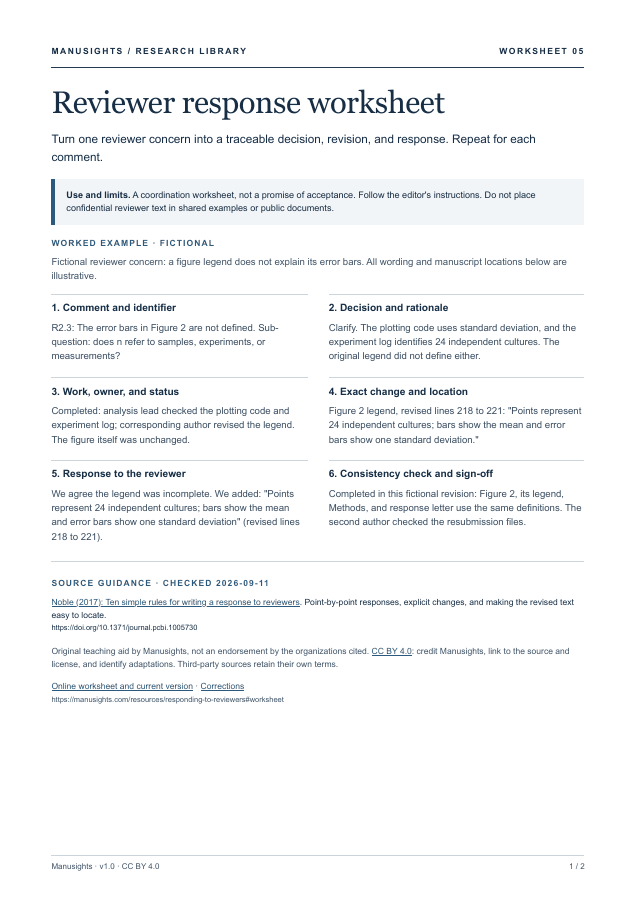
How to Respond to Peer Reviewer Comments
The point-by-point response format, how to handle disagreements and contradictory reviewers, tone that editors notice, and approaches for difficult revision scenarios.
Peer Review Explained: Types, Process & Criteria
Single-blind vs double-blind vs open review, the full submission-to-decision process, what reviewers actually evaluate, and the documented limitations of peer review.
Understanding peer review & publishing
These pages help when the underlying process itself is the problem: what peer review is doing, what rights authors keep, what journals expect for data sharing, and how to avoid obviously bad venues.
Identifying Predatory Journals in Biomedicine
Field-specific warning signs, how predatory publishers target life scientists, a 7-point verification checklist, and the MDPI/Frontiers gray area explained.
Author Rights & Copyright After Publication
Copyright transfer vs. exclusive license vs. CC BY in plain English. What you can still do with your paper after publishing.
Data Sharing Requirements: NIH Policy & Repositories
NIH DMS Policy (Jan 2023), what journals require in data availability statements, where to deposit genomics/imaging/clinical data, and FAIR principles in practice.
How to Conduct a Systematic Review in Biomedicine
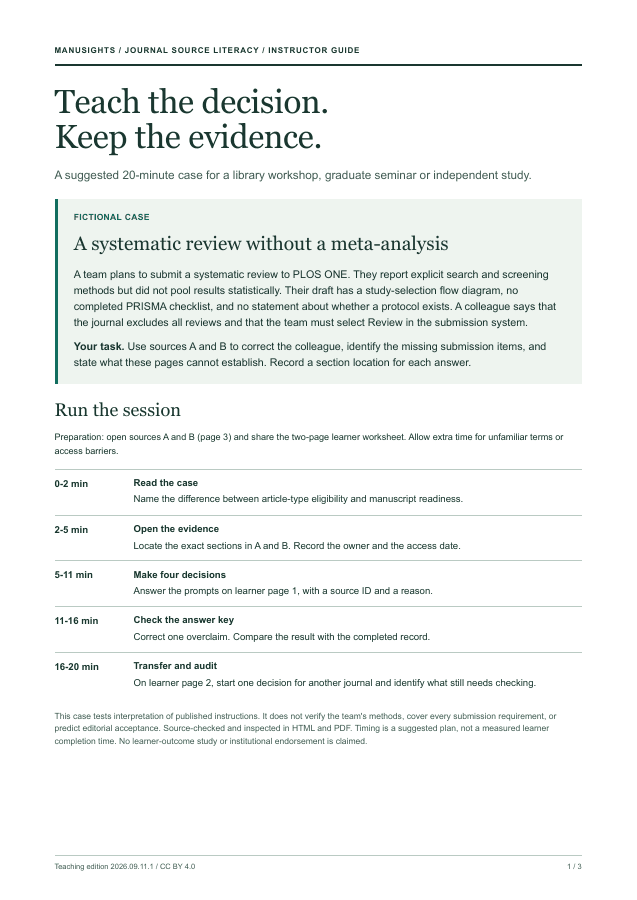
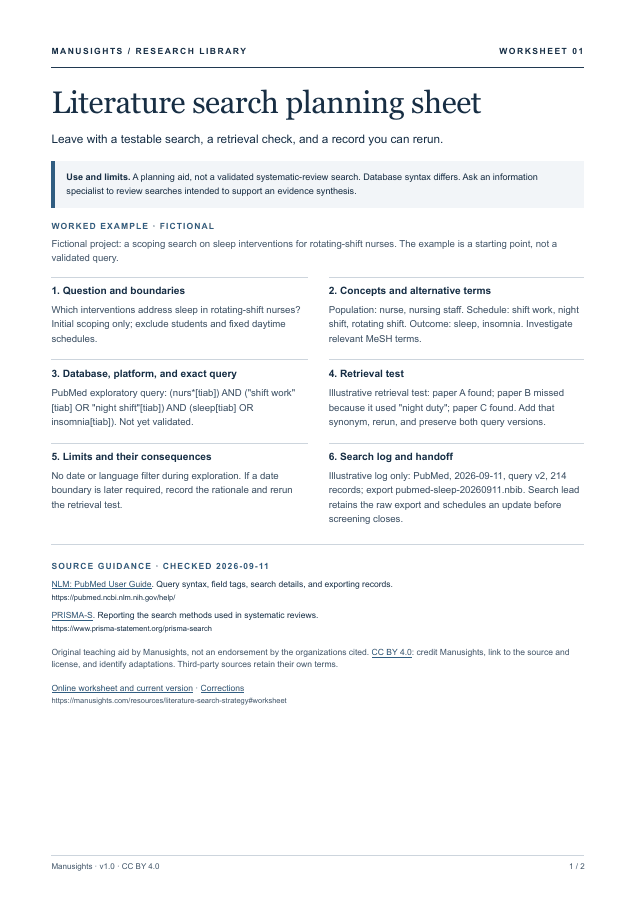
Protocol to publication: PROSPERO registration, multi-database searching, Covidence vs Rayyan, RoB-2 and QUADAS-2 risk of bias, GRADE certainty ratings, and PRISMA 2020.
Research career & methods
This section is for the parts of academic life that sit adjacent to manuscripts but still shape publishing and career progression: reviewing papers, writing job-market materials, and avoiding preventable stats mistakes.
How to Write a Peer Review
Structure, tone, ethics, and what editors actually want from a peer review. Covers conflicts of interest, handling suspected fraud, and how to get your first review invitations.
How to Write an Academic Research Statement
Structure and strategy for writing a compelling research statement for faculty job applications: past research, future aims, and the through-line hiring committees look for.
Statistical Resources for Biomedical Researchers
Choosing the right test, power analysis before data collection, the most common statistical mistakes reviewers catch, and software tool comparisons.
AI & tools
For researchers trying to use AI without turning their workflow into garbage. This is where tool recommendations belong, not inside the core publishing guides.
For research librarians: All guides have stable permalinks, suggested citations, and data provenance notes. Free to link from LibGuides and course pages. Librarian linking guide →