Catch what reviewers will, before you submit.
Run the Free Readiness Scan in about 2 to 3 minutes. Get your score and top risks before you submit.
Calibrated with 35+ CNS-experienced reviewers and senior scientists from publication and institutional contexts like these








From researchers
Designed for researchers who demand rigor.
Depth
Catch desk-reject reasons before reviewers do
We surface the same structural critiques editors flag in triage: underpowered statistics, scope mismatch, missing controls, claims the data doesn't support. Before submission, when you can still fix them.
“Particularly helpful in identifying potential problems before submission.”
It pinpointed the gap between our current manuscript and the standards of our target journal.

Eric Lu Zhang
Associate Professor of Computer Science, Computational Genomics
Hong Kong Baptist University
Precision
Methodological feedback general-purpose AI can't reach
Manusights runs a diagnostic rubric our 35+ reviewer network co-designed from how real top-tier reviewers judge manuscripts, plus claim-level citation verification and a retraction and integrity gate that general-purpose chatbots don't run.
“Specific, claim-level, actionable engagement with the actual science.”
Peer review tells you whether you passed a gate. This told me what my work actually needed.

Hector Damian Cirino
Independent Researcher, Atmospheric Science
Harmora Framework
Speed
Reviewer-grade insight in about 30 minutes
Most papers return in about 30 minutes of end-to-end work. Hundreds of frontier LLM calls under the hood, structured against the rubric, condensed into the issues that matter. Iterate before submission, not after rejection.
“It helped me restructure my paper after a rejection. It's now under review at AJAE.”
Extremely helpful for identifying realistic target journals.

Anaëlle Denieul-Babrot
Recent PhD, Economics
INRAE, France
Candor
Criticism that holds up when real reviews arrive
A pre-submission review earns its keep by telling you what reviewers will eventually say, while you can still act on it. That means naming the limitations of the work as plainly as the strengths, before an editor does.
“Both candid and correct about the strengths and limitations of my manuscript.”
Seeing this feedback earlier would have saved me learning it the hard way.

Bo Cowgill
Assistant Professor, Economics
Columbia Business School
Standout
The one researchers keep after trying the others
General-purpose assistants polish prose. Manusights does the editorial work: where to submit, what reviewers will object to, and which citations you missed. It's the difference between a writing aid and a pre-submission review.
“I've tried a few AI review tools, but Manusights stands out, almost like having an editor by your side at all times.”
It foresees what editors and reviewers will object to and drafts responses with the exact changes needed. Just knowing where to submit saved me months.
Lora Chen
Researcher, Biomedical Research
University of Hong Kong
Value
Reviewer-grade feedback at a fraction of the cost
Hiring an outside reviewer or editorial consultant to read a full manuscript runs into the hundreds or thousands and takes weeks. A Full Review is $39 and comes back in about half an hour. Researchers keep telling us the feedback lands close enough to make the comparison fair.
“Roughly 1/30th of the cost of a true outside, independent reviewer.”
The results were really good and are helping us refocus the paper across more of the government-sponsored entities.

M. Cary Collins
Professor of Finance
Providence College
Quotes used with permission or quoted verbatim from the author's own public posts. Across the broader Manusights testimonial wall, names are anonymized to protect client confidentiality unless authors explicitly grant permission.
Research collaboration
 LitmapsManusights
From literature map to journal choice
We created two companion guides with Litmaps for researchers deciding what their paper adds and where it belongs.
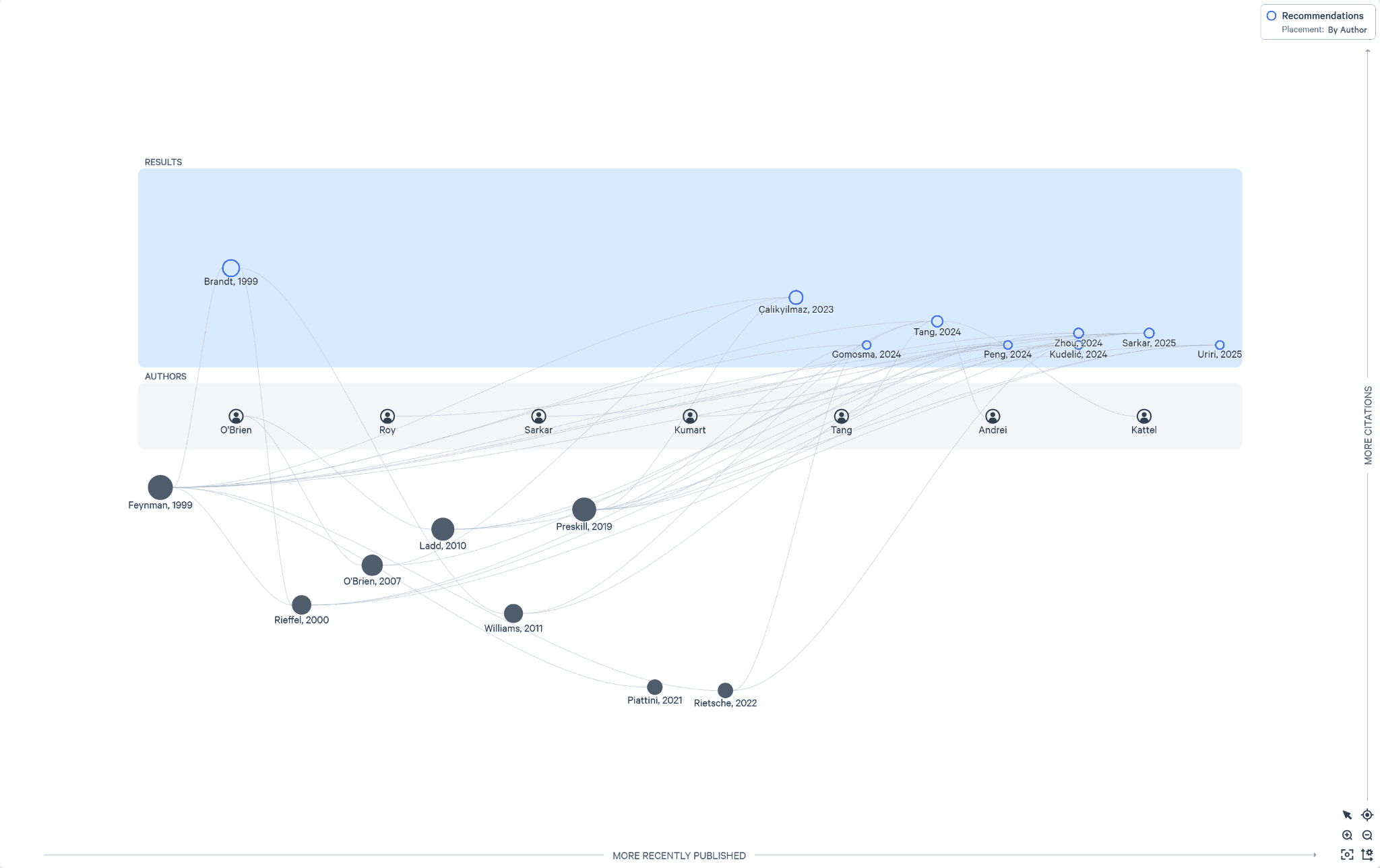 A real Litmaps citation map
Privacy, by design
Your research stays yours: private, secure, and never used to train AI.
Your content is secure
Encrypted in transit and at rest. Strong access controls and modern security posture. Read our Privacy Policy.
Never used for training
Manuscripts are processed with bounded retention and purpose-limited access. Manuscript content is not used to train Manusights or model-provider models.
Documented privacy controls
Subprocessors, encryption details, model-provider controls, and incident-response posture are documented in our Trust Center.
How a review is produced
Every review follows a reviewer-calibrated process.
Manusights is not a single prompt to a single model. Each Full Review runs a structured multi-stage analysis against a reviewer-calibrated rubric for submission readiness.
8
Score dimensions
Covering claims, evidence, methods, figures, citations, journal fit, reviewer risk, and revision priority
35+
Calibration reviewers
The rubric was calibrated with reviewers who publish in selective journals
~30
Minutes
Average end-to-end turnaround
Compared with published peer review
We ran a Full Review on a 2022 preprint.
Then we checked it against its three reviewers.
Nature Communications published the paper in 2025, with its reviewer reports. We compared our review of the original preprint with the major concerns the reviewers raised. That includes field-specific issues like AQP3 hydrogen peroxide transport.
reviewer concerns
matched
the paper spent
in review
to generate
the report
What we caught (click to compare)
Manusights Full Review
DFP00173 cannot distinguish water transport from glycerol/H₂O₂ transport or structural AQP3 functions. Hara-Chikuma et al. (2008) is cited but not adequately discussed. If the inhibitor effect is mediated through H₂O₂ transport blockade, the entire water-influx model requires revision.
Nature Communications reviewer
AQP3 is permeable to glycerol and H₂O₂ as well as water. Glycerol and H₂O₂ uptake via AQPs are known to be required for T-cell migration and activation.
Result: Authors ran catalase experiments to rule out H₂O₂ as the mechanism.
Manusights Full Review
Essential Experiment A: Generate CD4-Cre × Aqp3fl/fl mice. The entire water-influx conclusion depends on AQP3 as the water channel, and the pharmacological inhibitor cannot distinguish water transport from glycerol/H₂O₂ transport. Without genetic evidence, the AQP3 assignment is not secure.
Nature Communications reviewer
Some findings regarding AQP3 should be confirmed genetically. Loss of function experiments such as CRISPR knockout would be required.
Result: Authors added Aqp3 genetic mutant data in revision.
Manusights Full Review
Hypotonic medium simultaneously increases cell volume, reduces ion concentrations, alters membrane tension, activates stretch-activated channels (PIEZO), and changes volume-sensitive kinases (Rac1, CDC42). The claim that water influx per se drives ERK activation is mechanistically underdetermined.
Nature Communications reviewer
Lower external Cl⁻ concentration can shift Cl⁻ equilibrium... hypotonic stress promotes vascular cell proliferation via WNK1-mediated VRCC regulation... does not fully exclude the possibility.
Result: Reviewers forced explicit limitation language and additional controls.
Manusights Full Review
The model proposes WNK1 acts through AQP3, but the WNK1 inhibitor phenotype is stronger than the AQP3 inhibitor phenotype, implying WNK1 functions through pathways beyond AQP3 that are not addressed.
Nature Communications reviewer
AQP3i-induced reduction was less than WNK1 deletion... WNK1 may regulate T cell proliferation not only via AQP3 but also by alternative pathways.
Result: Authors had to discuss non-AQP3 branches of WNK1 signaling.
Manusights Full Review
The pathway from water influx to ZAP70 phosphorylation is completely unaddressed. It's not shown whether the S-phase defect reflects slower fork progression or reduced origin firing, either of which would activate ATR by distinct mechanisms.
Nature Communications reviewer
What is the evidence that WNK1 deletion results in ATR activation independently of DNA damage?
Result: Authors added mechanistic clarification and supporting data.
Manusights Full Review
In vivo experiments use n=3-5 per group with substantial scatter. Mann-Whitney with n=3-4 has very low power and any significant p-value is fragile. Error bars (SEM vs SD) not consistently stated. Figure legends incomplete across Figs. 2 and 3.
Nature Communications reviewer
Please show individual data points. Cell volume measurement methodology is vague.
Result: Authors added individual points and tightened figure/stat reporting.
6 of the 7 major concerns from three reviewers, raised from the preprint alone.
The paper spent 29 months in review. The reviewer reports were public by then, but our review saw only the preprint.
Calibration network
Calibrated with 35+ CNS-experienced reviewers.
At the beginning, Manusights worked with reviewers and senior scientists with Nature, Cell, Science, and other selective-journal experience to map the failure patterns strong reviewers actually notice. Automated Full Reviews apply that calibrated rubric consistently; they are not represented as live human peer review.
500+
Papers published
35+
Reviewers in the calibration network
72+
Years of experience across the profiles below
Full Professor
18+ years experience
PhD
Full Professor
24+ years experience
MD, PhD
Associate Professor
14+ years experience
PhD
Senior Scientist
16+ years experience
PhD
+31
More calibration contributors
across oncology, cardiology, infectious disease, and more
Calibration contributors come from institutions including





Earn free reviews
Invite a colleague: they get 25% off their first review, and you get a free Full Review when they buy. Or earn credits by posting about Manusights, or acknowledging us in a published paper.
Questions
Everything you need to know.
Manusights is a pre-submission manuscript review built specifically for academic researchers. You upload your paper, the engine runs a reviewer-calibrated diagnostic rubric built from real top-tier-journal peer-review patterns, and you get back the issues editors and reviewers are most likely to challenge. Before submission, when you can still fix them. The free Readiness Scan returns in about two to three minutes; the Full Review delivers in about 30 minutes.
Grammar tools work at the sentence level: comma placement, word choice, passive voice. Manusights works at the manuscript level: scope fit, methodology gaps, claims your data doesn't support, citations that don't say what you say they say, figures that need redesign. We don't fix your sentences. We show you the issues reviewers are most likely to challenge. Run a grammar tool after Manusights, not instead of it.
General-purpose models are useful for brainstorming and rewriting, but they often drift toward agreeable feedback. Manusights is built for a narrower job: applying a reviewer-calibrated diagnostic rubric to the failure patterns real editors flag in triage. The Full Review runs a structured multi-stage analysis, not a single chat prompt, so the output stays focused on the submission risks you can still fix.
Free Readiness Scan: about two to three minutes. Full Review: about 30 minutes from upload to .docx report. Most papers deliver faster than that; we set the expectation at 30 minutes because the report runs through a structured reviewer-grade diagnostic, not a single chat prompt.
Yes. Manuscript content is not used for model training, and automated review access is limited to the systems needed for ingestion, analysis, report delivery, support, and reliability. No human reviewer reads your manuscript as part of the review.