Under 5% may win Europe's top early-career grant
Get Manusights Weekly free, every Monday

This week: Europe's most prestigious early-career grant may now fund fewer than 5% of applicants, Springer Nature is testing an AI assistant for reviewers, and what scientists say they earn. Plus a form everyone flying into the US must sign from Tuesday night.
One tap: would you want an AI assistant helping the reviewers of your next paper? Yes · Only to check facts and figures · No. Tap one, then press send. I will share the answers next week.
 | Erik Founder, Manusights |
Submitting soon? Run your draft through the free check and see the top concerns an editor might flag.
Under 5% of applicants may win Europe's top early-career grant
For: Anyone applying for grants, in any field
Applications for the European Research Council's 2027 Starting Grants jumped 60% this year, to 7,710 by the ERC's preliminary count. With up to 373 grants on offer, down from 421 last year because of funding constraints, Nature calculates the success rate will fall below 5%, from 8.8% in the last call. Each grant offers base funding of up to €1.5 million over five years.
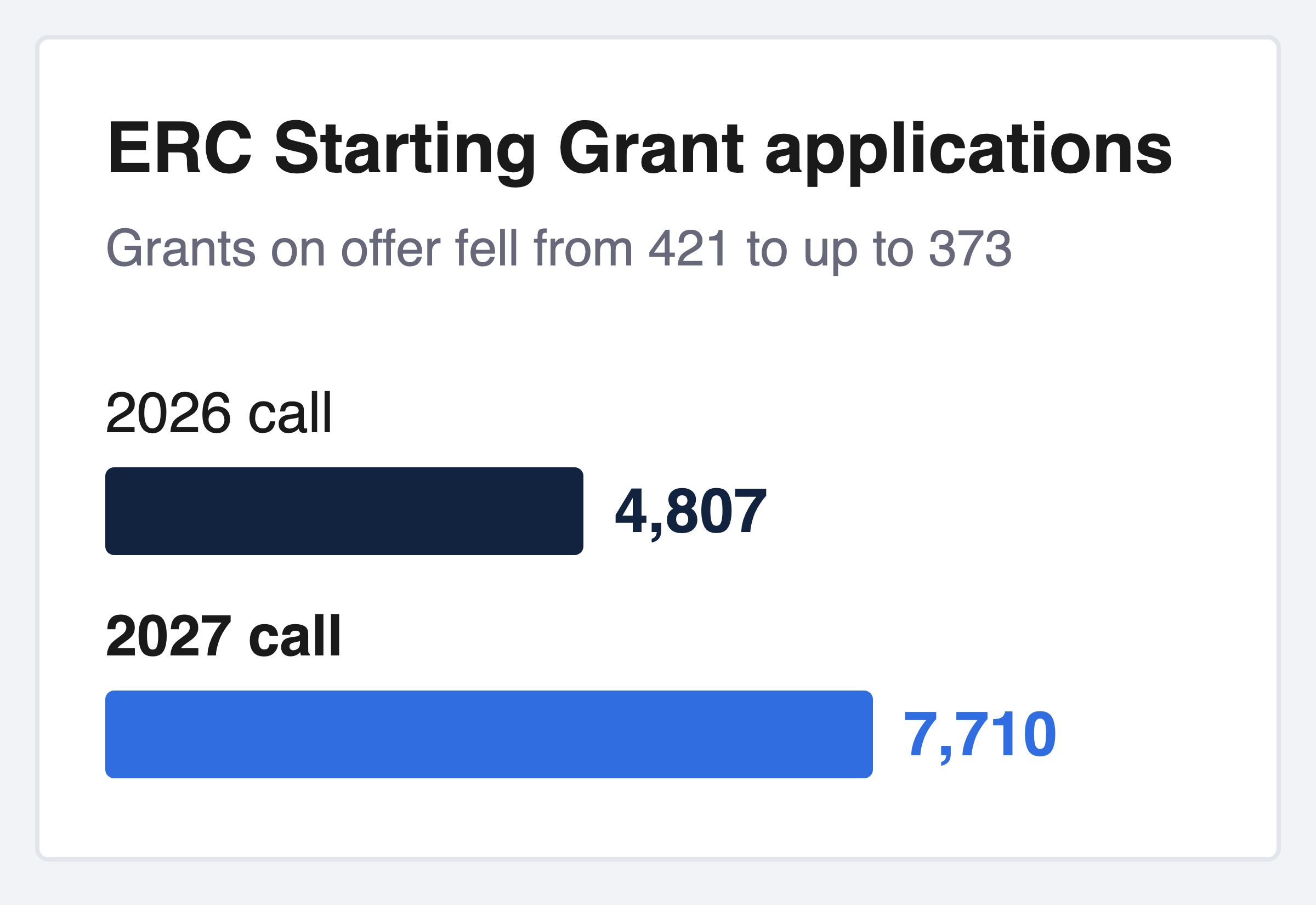
Why the surge. The ERC points to its own rule change: it widened the eligibility windows for its 2027 Starting and Consolidator calls, and it says comparisons with past calls should take that into account. Nature's reporting adds a second cause: AI tools make applications much easier to write. "It's just so much easier to generate text," Lynn Kamerlin, a molecular biologist at the Georgia Institute of Technology who has studied grant success rates, told Nature. ERC president Maria Leptin said: "The number is a bit scary."

When it becomes a lottery. Kamerlin puts the ideal success rate at about 20%. Below that, she says, it gets hard to pick the best proposals without subjective judging, and she suggests choosing the top 20% and then drawing winners at random, as some funders already do.
My read: at these odds, a strong proposal is necessary but no longer enough. Treat every big application as one of several, and plan a second home for the same project from the start.
Do this today: If you applied this round, start adapting the project for a second funder now, because the ERC plans to announce winners in summer 2027. If you ruled yourself out before, read the new eligibility windows before the next call opens.
Sources: European Research Council, Starting Grants 2027 applications: Facts and figures, 23 Oct 2026 · Nature, Is research funding now a lottery? Elite funder ERC swamped by applications, 28 Oct 2026 · 2 min
Forward this to a colleague with a grant deadline coming up. Send it to a colleague
For: Authors and reviewers, in any field
Springer Nature is testing an AI assistant for reviewers. The publisher announced a research partnership with Google's DeepMind lab to co-design an assistant for reviewers, built on Google's Gemini models. It is meant to help reviewers navigate a manuscript, analyse large amounts of text, charts and figures, and find the parts that may need closer attention. A prototype is being tested, and content used to build and test it stays inside Springer Nature's private Gemini Enterprise platform.
Why it matters: No journals or start date have been named, but this is the clearest sign yet that some reviewers of your papers will read them with AI help. The publisher says expert human judgement stays at the centre of the process.
What I would do: Make your paper easy to check on a first pass: state the main result, the sample size and the key limitation plainly in the abstract, and make sure every figure can be read without the text. As a reviewer, use only the AI tools your journal allows, and never paste a manuscript you are reviewing into a public chatbot.
For: Everyone, in any field and any country
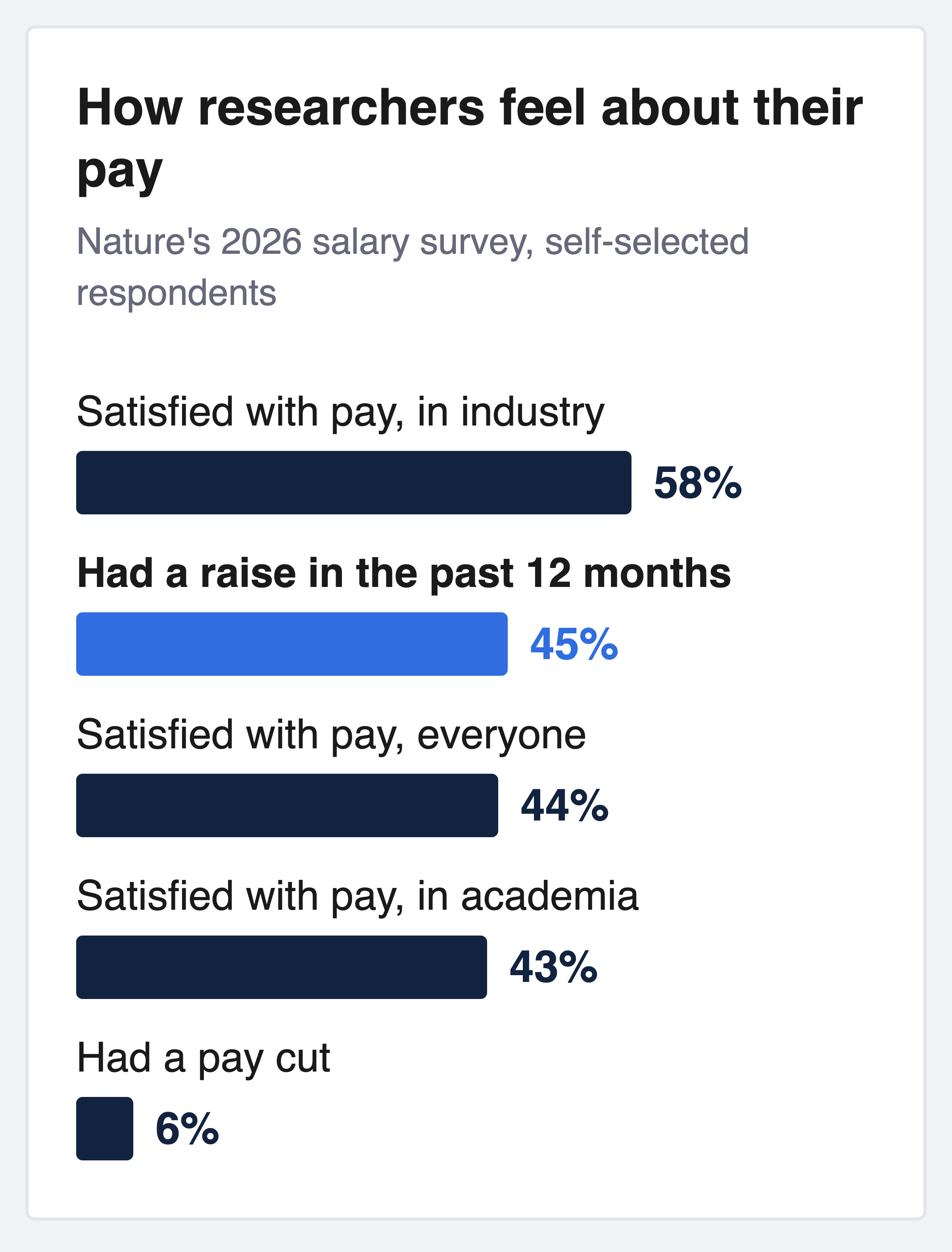
Fewer than half of the researchers Nature surveyed got a raise in the past year. Nature asked 3,882 researchers in 133 countries about their pay. Industry salaries were 66% higher than academic ones, and industry scientists were more likely to be happy with what they earn.
Why it matters: It is a self-selected sample, so read it as a rough guide. Still, few other sources show what researchers in other countries and sectors say they earn, and that matters most just before a job offer or a contract renewal, when you get one chance to ask.
What I would do: Before your next pay conversation, open the full survey data that Nature links from its article and filter for respondents in your country and sector. If only a handful match, widen to your region. Walk in with that range.
Sources: Nature, Are salaries getting worse? Many scientists think so, 26 Oct 2026
✈️ Anyone flying to the US · From Tuesday night, everyone flying into the US from another country must sign a statement that they have not been in the Democratic Republic of the Congo in the 21 days before boarding. The CDC order runs from 11:59 p.m. Eastern on November 3 until December 18, and airlines must confirm it before you board. If you have a US meeting before mid-December, look out for the form from your airline; if you have been in the DRC recently, read the order's exemptions before you book. Federal Register
🤖 PLOS authors · PLOS does not require you to disclose AI used for language improvements, such as correcting spelling or grammar or rephrasing for clarity. It does require disclosure when AI is used to generate or revise content, or to write analysis code, and other journals draw the line elsewhere, so read your target journal's policy before you submit. PLOS
🎓 Postdocs and new faculty at US institutions · HHMI's combined Hanna H. Gray Fellows and Freeman Hrabowski Scholars competition opens on Tuesday, November 3, and closes December 15. Postdocs applying as Gray Fellows may not have more than 7 years of experience by the application deadline, and your institution must be on HHMI's eligible list, so check both this week. HHMI
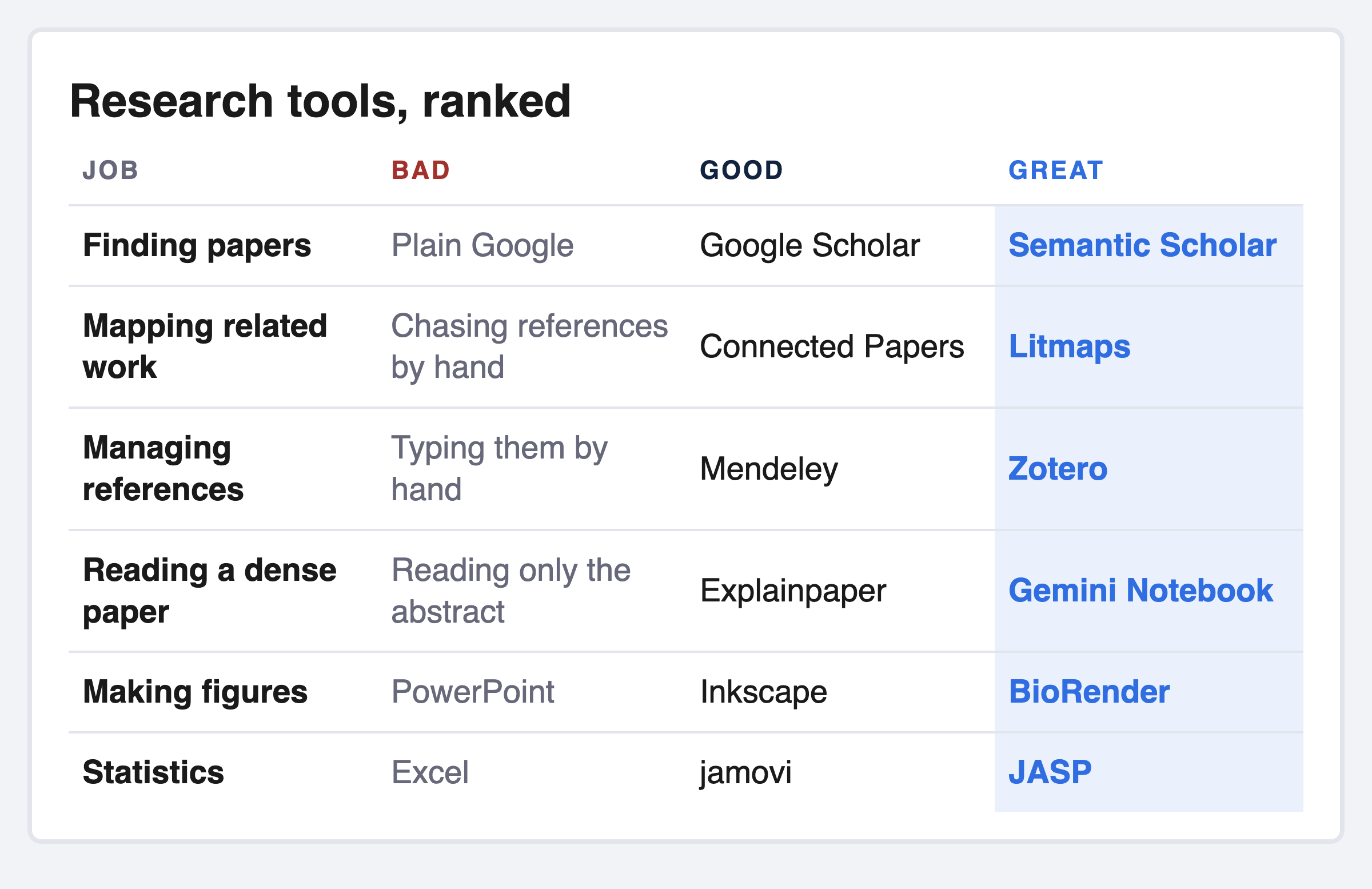
From the first search to the stats, a habit to drop, a fine option and the pick to switch to. Five of the six picks are free to use. The catch is the figure tool: its free plan makes up to 3 figures, and you cannot publish them.
Sources: Semantic Scholar · Litmaps, Pricing · Zotero · Gemini Notebook Help, usage limits · BioRender, Pricing · JASP
Which one was most useful to you today? Tap it, then press send.
Corrections: None this week. Last week three of you told me your field: cell and molecular biology, clinical medicine or public health, and something else. Every item now says who it is for. Spot an error? Reply and we will run the correction right here, loudly.
That's the week. Forward this to a labmate with a grant deadline coming up, and if it reached you secondhand, subscribe here.
| Erik Founder, Manusights |
You're getting this because you subscribed at manusights.com or uploaded a manuscript for review.
Forward to a friend
Get this every Monday
What changed in publishing, what it means for your submission, and one thing to try. Free.